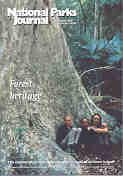
The Nature Coast of NSW
Taking a stand
on our South Coast forest heritage
|
The Nature Coast of NSW Taking a stand |
Mike
Thompson
NPA Executive
Nature Conservation Council of NSW
Premier Bob Carr welcomed
the 21st century with a typically thoughtful article,
recognizing historic forest decisions facing his Government :
"In November, on a beautiful day, I flew at 500 feet along the South Coast. I saw coastal lakes, a forest-clad mountain range and that wonderful undeveloped jewel Jervis Bay."
"One source of my love for Australia is that nature still lives over much of it. With all our problems, there is still space here, and old growth forests, and, yes, backyards. And the day will too soon come when our land is a wonder of the world: wildflowers on coastal heath, a swamp with wild- fowl, rainforest that meets water’s edge."
"Over the next 100 years treasures like these will be erased from the planet, outside a few struggling game parks or tourist-trampled reserves. Forests torn out … to meet the demand of this vastly expanded human presence."
"Only 30 years ago we had no idea how quickly rainforests would be bulldozed …"
"There will certainly be a whole lot less nature around at the turn of the next century – a huge loss of plant and animal life, biodiversity, as the scientists call it."
Forest regions contain over 50% of Australia’s terrestrial biodiversity, and scientists say most species have not yet even been identified. 15% of known Southern Forest fauna species are threatened, including glossy black cockatoos, powerful owls and spotted tiger quoll, according to definitions in the NSW Threatened Species Conservation Act 1995. Koala populations on the ‘Nature Coast’ are also in serious decline. Nobody knows the real value of the sanctuaries we lose when we clear old growth areas like the spotted gum forests of our South Coast wonderland.
A brief exponential history of
our South Coast Forests
A real world perspective helps us make better land- use decisions with eternal
impact: • 400 million years ago our unique forest species and ecosystems began
evolving in Gondwanaland. • Over 60,000 years ago Aboriginal people began
sharing the Australian landscape. • 10,000 years ago the Ice Age helped shape
the coastal eucalypt forests and ecosystems as we see them today in our remnant
old growth forests. • The 1800s saw unrestricted whaling and logging spur
development on the South Coast. • The 1900s, especially the last half, saw
tree clear- ance increase alarmingly as chainsaws and bulldoz- ers more easily
supplied local sawmills previously dependent on manpower and old modes of
transport. Worse still, 30 years ago the Daishowa woodchip mill began bypassing
local communities and taking 90% of whole logs directly to Eden, using fleets of
new timber jinkers. • In 1992, NSW signed the National Forest Policy
Statement, promising Ecologically
Sustainable Forest Management (ESFM).
NSW Nature Conservation Council representatives finally withdrew from ESFM
committees in 1998 in protest at the unsustainable rate of old growth logging.
• In 1999 the Carr Government’s Eden Regional For- est Agreement secured
extensive new South East national parks and a 20-year supply of sawlogs and
woodchips from old growth forests around Eden. • In March 2000, the NSW Carr
Government will con- sider 20-year sawlog and woodchip contracts, and decide the
ultimate fate of our southern region forests.
Woodchipping threatens our
forest heritage
and water catchments
Ray Hammond was born in Eden and
in the 1960s was District Forester at Bateman’s Bay. He recalls 2 the
beginning of woodchip proposals for the Eden mill and was amazed how little
debate there was on issues like old growth tree clearance which would:
"change forever the nature of forestry in Australia."
"The whole thing was conceived very hastily. They were getting into a new ball game and they had no idea of the value of the forests."
"When you have got a lot of something, you don’t see it. As a young man, there was beauty all around me in the bush but I didn’t see it … Beauty was just in the forest, in the bush, it was something you took for granted. There was so much of it, you don’t see it after a while. I am increasingly conscious now that the old growth stands are being removed … if we don’t look after them now, we never will have them."
Today nine out of ten old growth whole logs cut from the Eden region are trucked directly to the Dai- showa woodchip mill. It is an industry-promulgated myth that only off-cut ‘waste’ in the form of ‘heads and butts’ is being woodchipped.
NSW State Forests are selling our logs to the Eden woodchip mill for $8 per tonne. Revenue goes directly to fund the NSW State Forests organisation; royalties paid to NSW taxpayers are minimal. The price paid last year for woodchips declined from $80 to $65 per tonne, as supplies of cleaner alternatives from overseas plantations became increasingly competitive.
Whilst governments continue to sacrifice our publicly owned old growth heritage so cheaply, why would industry ever want to change to renewable supplies from regrowth and plantation forests?
21st century old growth logging and woodchipping now threatens ‘Nature Coast’ forests in the Eurobodalla and Shoalhaven areas. Under options promoted by NSW State Forests for a 20-year Southern Regional Forest Agreement, South Coast spotted gums up to 400 years old would be logged and progressively replaced with more uniform trees/poles up to a maximum age of 100 years. Unique and irreplaceable ancient South Coast natural forest ecosystems will start to resemble new eucalypt forests overseas.
Old growth trees as fuel for NSW power
stations?
The threat from woodchipping is increasing.
Australia has a challenge to meet its international obligations to reduce
greenhouse gas emissions from coal. Sensible government proposals include
promoting trees as carbon sinks, and the adoption of alternative renewable
energy sources such as solar and wind generators. But NSW State Forests has a perverse
alternative proposal. They want to burn
woodchips – including those from our old growth
trees – as ‘renewable energy’. Again NSW State Forests promise only ‘waste’
will be woodchipped!
The NSW State Treasurer Egan supported this plan to double existing woodchip volumes, and the idea of burning them to generate electricity. He refused to limit this plan to plantations 3 : "Mr Egan has warned that the commercial survival of State Forests … may depend on such a radical decision, which could involve timber collected from all regions."
Ironically, the NSW State Forests organisation was created in 1916 to help conserve our trees. Now it seems our old trees could be sacrificed to conserve this State Forests organisation.
Jeff Angel, Director of Total Environment Centre, says the State Government’s proposal would involve the equivalent of clearfelling 15,000 hectares a year 3 : "Burning trees still gives off CO². Burning trees for energy is taking us back to the dark ages. It’s not green energy, it’s prehistoric energy."
Social and economic implications
Woodchipping provides minimal local employment and destroys old growth natural
assets belonging to future generations. Unfortunately, old growth spotted gums
on the South Coast offer very profitable short- term easy pickings for sawn
timber, veneers and woodchips. Tourism is a nearly $1 billion per annum industry
on the South Coast – and growing. Old
growth forestry is a $15 million dollar business -
and declining.
Fortunately the employment facts
already speak for themselves on the South Coast:
• Over 80,000 people are employed in this
coastal sub-region.
• Over 20,000 residents already thrive on growing employment in ‘Nature
Coast’ tourism and retail service industries. Other decentralised and
ecologically sustainable growth industries include horticulture and housing,
servicing visitors, residents, and regular holiday makers attracted
by the natural environment.
• The timber industry employs fewer than 300 people (down 11% over the five
years to 1996 according to the Australian Bureau of Statistics 4 ). This 0.4% of
jobs in the South Coast sub-region compares to the 12% employed in forestry jobs
in the Eden region (Commonwealth DPIE 1998).
• 1,300 people are already employed in the softwood industry around Tumut,
clear evidence of the region’s great potential for jobs based on plantations.
Conservationists involved in the Comprehensive Regional Assessment (CRA) process for the Southern Forests repeatedly asked both State and Federal governments to spend CRA money on researching non-destructive, non-wood-based, regional job opportunities. State Forests and their influential timber industry allies again successfully lobbied to channel most of the latest public expenditure into researching their ‘options’ to progressively use more natural timber – including old growth woodchips. More promising new job opportunities identified on the South Coast for nature-based tourism, Aboriginal cultural heritage tours, pest and weed control, land rehabilitation, plantations, education and Internet careers remain comparatively unexplored and under-promoted. We want people living with, and working in, natural forests on the ‘Nature Coast’.
21st century NSW taxpayers have inherited salination problems generated by 20th century greed and ignorance in the Monaro and other Murray- Darling areas. We now need State Forests resources to help generate new jobs by re-focusing on reforestation opportunities for existing degraded farmlands throughout regional NSW. The CRA process identified the Southern Tablelands as just one example of an area possessing outstanding growth opportunities for forest-industry jobs based on plantations.
The ‘Conservation Option’: a compromise
…
and the only long-term solution!
The State Government has said it will sign a 20-year forest agreement for the
Southern Region of NSW by the end of March 2000.
Given that NSW State Forests and their timber industry allies have been driving the CRA process, it was predictable that their vested interests would be reflected. Five of the six ‘options’ being considered for the South Coast include woodchipping of old growth spotted gum forests.
The ‘Conservation Option' (providing 32,000 m³ of sawlogs, as per current long-term contracts) was the only CRA proposal protecting all old growth forest on the South Coast. It also balances exactly halfway between the extreme demands of ‘zero’ logging in native forests, and the maximum-wood-volume option pushed by industry.
Five of the published government options offer no long-term resolution to the forest conflict. A maximum of 25 jobs is affected by the Conservation Option, because over 80% of the Southern Region’s sawlogs already come from plantations – which also supply woodchips. This option also continues an adequate supply of native sawlogs from regrowth forests, to negate job losses in existing sawmills (as in the compromise forest agreement accepted recently by the Queensland Government).
The Conservation Option 6 protects existing employees – with assistance for timber industry adjustment – using environmental and other funds promised by governments (unfortunately the hundreds of South Coast residents previously displaced from jobs in fish processing, banking, Telstra and other declining industries in the region did not receive similarly deserving consideration!)
Biodiversity and heritage conservation are also top priorities, so one measure of the degree of compro- mise offered by conservationists is that the dedicated reserves proposed meet only 80% of the official CRA targets set for protecting forest ecosystems.
These ‘Community Reserve Proposals’
reflect strong public support and include:
• Water catchments to protect coastal lakes and the headwaters of
rivers, including the Shoalhaven, Tuross, Moruya and Clyde (several existing
national parks are only a few hundred metres wide).
• A 350 kilometre Great Escarpment National Park stretching from the
Victorian border to the Macquarie Pass near Wollongong.
• Five corridor links across hinterland forests to coastal parks.
The Conservation Option national park declarations in the year 2000 are designed to satisfy the reasonable aspirations of residents, visitors, con- servationists, businesses, local govern- ments and the new Southern and South East Catchment Management Boards. Granting these Community Reserve Proposals would avoid unnecessary and inevitable ongoing conflict with NSW State Forests and the timber industry over these same South Coast forest areas.
Today, remnant old growth forests represent a tiny 1% of Australia’s land surface. What we have left is all that we will ever have!
The people of NSW own these State Forests. They are on loan from future generations and include huge ancient spotted gums and other trees (with girths up to 10 metres), delicate understories and wetlands.
Old growth forest conservation campaigns are gaining broad bipartisan support Australia wide – it is no longer a city versus country issue. The latest survey by Roy Morgan in a Victorian forest region showed 80% of locals did not want woodchipping, and 80% also support a compromise solution "like a Queensland-style forest agreement" .
Studies confirm both emerging public understanding and support for this Conservation Option, especially since no net loss of jobs is forecast in this growth region of Southern NSW.
Conservation of our irreplaceable old growth forest biodiversity – and natural and cultural heritage – in southern NSW does not even require large capital expenditure.
Long-term job growth and economic prosperity will depend on the ‘Nature Coast’ retaining its unique competitive advantage as a highly productive 'undeveloped jewel' of the 21st century - for the benefit of visitors and residents alike.
References
1 NSW Premier Carr, Sydney Morning Herald (6 January,
2000)
2 Ray Hammond, NSW Forester in G Borschmann’s The
People’s Forest (1999)
3 NSW Treasurer Egan, Sydney Morning Herald (25 November
1999)
4 State-Commonwealth CRA Southern Regional Profile
Statistics (November 1999)
5 State-Commonwealth CRA Options Information Kit (January
2000)
6 Roy Morgan Research Wombat Forest Survey Results
(January 2000)
* Mike Thompson is a member of the Southern Forest Forum and sits on the executive of the National Parks Association and the Nature Conservation Council of NSW. Mike.Thompson@nature.net.au

Spotted gum forest in Greater
Murramarang area, South Coast NSW
Photo: Andrew Wong
COVER ST